
Introduction
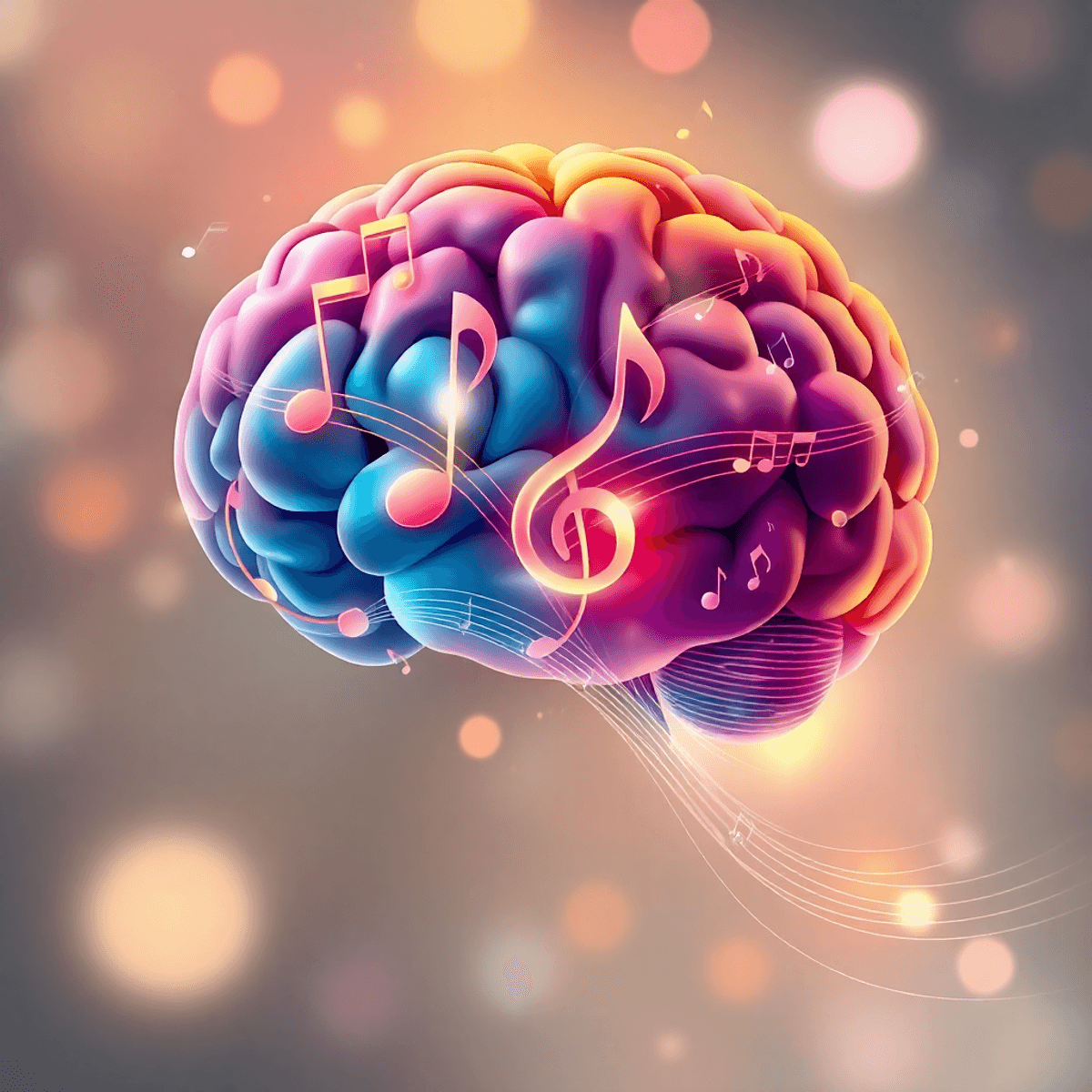
The Brain Song For Memory refers to the strategic use of melodies, rhythms, and musical patterns to encode and retrieve information more efficiently. You’ve likely experienced this phenomenon yourself—remembering the alphabet through its familiar tune or recalling a phone number set to a catchy jingle. This isn’t coincidence; it’s your brain leveraging music as a powerful mnemonic device.
Music serves as a mnemonic device by creating multiple neural pathways for storing the same information. When you pair facts with melodies, you’re essentially giving your brain two retrieval routes instead of one. The rhythm provides structure, the melody creates emotional resonance, and together they transform abstract data into memorable patterns your mind can easily access.
Memory enhancement through effective learning strategies has become essential in our information-saturated world. Whether you’re a student preparing for exams, a professional mastering new skills, or someone committed to lifelong learning, understanding how to optimize your memory can dramatically improve your outcomes.
This article explores the brain song for memory alongside complementary techniques that maximize retention and recall. You’ll discover practical strategies for creating custom learning songs, understand the neuroscience behind musical mnemonics, and learn how to combine these methods with proven study habits. From the science of rhythm and memory to lifestyle factors that boost cognitive performance, you’ll gain actionable insights for transforming how you learn and remember information.
Understanding the Brain Song for Memory
Songs and jingles transform abstract information into memorable patterns through a combination of melody, rhythm, and repetition. When you set facts or concepts to music, you’re essentially creating multiple retrieval cues—the tune itself becomes a pathway back to the information you need. This explains why you can effortlessly recall advertising jingles from decades ago or sing along to songs you haven’t heard in years.
The Role of the Right Hemisphere
The brain’s right hemisphere plays a crucial role in this process. While the left hemisphere typically handles language and logical processing, the right hemisphere excels at processing musical elements like melody, pitch, and harmony. When you engage both hemispheres simultaneously through musical mnemonics, you create stronger, more resilient memory traces. This dual encoding makes information significantly harder to forget.
Practical Applications of Mnemonic Melodies
Consider these practical applications of mnemonic melodies:
- The Alphabet Song uses the melody of “Twinkle, Twinkle, Little Star” to help children master letter sequences.
- “HOMES” set to a simple tune helps geography students remember the Great Lakes (Huron, Ontario, Michigan, Erie, Superior).
- Medical students often create songs for memorizing the cranial nerves or bone structures.
- Math learners use rhythmic chants for multiplication tables or the order of operations (PEMDAS).
Advantages of Musical Approaches
Compared to other mnemonic methods, musical approaches offer distinct advantages:
- The Method of Loci (memory palace) requires significant mental effort to construct and navigate imaginary spaces.
- Acronyms work well for short lists but become unwieldy with longer sequences.
- Visual imagery demands strong visualization skills that not everyone possesses naturally.
How Music Enhances Memory Retention
Music and memory work together because songs provide built-in structure, emotional engagement, and automatic repetition—three elements that separately enhance memory retention. When you hum a tune while studying, you’re not just making learning more enjoyable; you’re activating neural networks that strengthen your ability to recall information when you need it most.
Boosting Your Memory Retention Abilities
To further enhance your memory retention abilities, consider exploring some brain-boosting hacks such as using supplements like Pure Pineal for optimal brain health or incorporating best foods for healthy brain function into your diet.
The Science Behind Music and Memory
The neuroscience of music reveals fascinating insights into why melodies stick in your brain long after you’ve heard them. When you listen to music while learning, your brain activates multiple regions simultaneously—the auditory cortex processes sound, the hippocampus handles memory formation, and the prefrontal cortex manages attention and planning. This widespread neural activation creates stronger, more interconnected memory traces than simple verbal repetition alone.
How Rhythm and Melody Enhance Memory Encoding
Rhythm and melody serve as powerful scaffolding for neural encoding. The temporal structure of music—its predictable beats and patterns—helps your brain organize information into manageable chunks. When you set facts to a tune, the rhythmic elements act as retrieval cues, making it easier to access stored information later. The melodic contour provides an additional layer of encoding, essentially giving your brain multiple pathways to reach the same memory.
Measurable Outcomes: The Benefits of Music in Learning
Research in auditory learning demonstrates the cognitive benefits of music through measurable outcomes. A study published in Memory & Cognition found that participants who learned foreign language vocabulary through songs showed 60% better retention after one week compared to those who used spoken repetition. Another investigation by the University of Edinburgh revealed that stroke patients who incorporated music therapy into their rehabilitation recovered language skills twice as fast as those receiving standard treatment.
The Role of Dopamine in Memory Storage
The connection between auditory input and long-term memory storage lies in how music engages your brain’s reward system. When you hear a catchy tune, your brain releases dopamine—the same neurotransmitter involved in motivation and pleasure. This chemical response strengthens the neural encoding process, essentially telling your brain “this information matters, store it securely.” The emotional resonance of music creates what neuroscientists call “flashbulb memories”—vivid, lasting impressions that resist decay over time.
Exploring Genetic Memory Theory
Interestingly, the concept of genetic memory theory suggests that some memories or knowledge could be passed down through generations. This is a fascinating area of study that intersects with our understanding of how we retain information.
The Role of Brain Hemispheres in Musical Processing
Your brain processes musical information through both hemispheres, creating redundant memory pathways that increase the likelihood of successful recall when you need it most. It’s also worth noting that short-term memory plays a crucial role in this process, acting as a temporary holding space for information before it’s either discarded or transferred into long-term storage.
Enhancing Learning with Cognitive Wellbeing Hacks
Moreover, incorporating certain cognitive wellbeing hacks can significantly improve focus and memory retention during learning sessions involving music.
Integrating Songs into Learning: Practical Strategies
Creating custom songs or jingles transforms abstract study material into memorable content. You can take any formula, historical date, or vocabulary list and set it to a simple melody. The process doesn’t require musical talent—even basic tunes work effectively. Start by identifying the core information you need to remember, then break it into short phrases that match a rhythmic pattern. For instance, chemistry students often create songs for the periodic table, while medical students develop jingles for anatomical structures.
The power of mnemonic songs lies in their ability to package complex information into digestible chunks. When you craft your own musical mnemonics, you engage in active learning rather than passive absorption. This creative process forces you to understand the material deeply enough to restructure it into lyrical form.
Rhythm and rhyme serve as natural memory anchors. Your brain recognizes patterns more easily than random information. By incorporating consistent beats and rhyming schemes, you create predictable structures that your mind can latch onto. Consider how effortlessly you remember commercial jingles years after hearing them—that same principle applies to study techniques with music.
Pairing The Brain Song For Memory approach with writing notes by hand while singing engages multiple sensory pathways simultaneously. This multisensory strategy strengthens neural connections because you’re processing information through auditory, kinesthetic, and visual channels at once. When you write the lyrics as you sing them, you’re essentially encoding the same information through different brain regions.
Borrowing familiar tunes eliminates the need to learn new melodies. You can adapt well-known songs like “Twinkle, Twinkle, Little Star” or “Happy Birthday” by replacing their lyrics with your study content. This technique works because your brain already knows the melodic structure, allowing you to focus entirely on memorizing the new information rather than learning both tune and content simultaneously.
Complementary Memory Techniques to Enhance Learning
While musical mnemonics create powerful auditory anchors, you can amplify your learning potential by incorporating surprising techniques on how to improve memory that actually work, such as visualization techniques and multi-sensory learning strategies. These methods work alongside brain songs to create multiple pathways for information retrieval.
Memory Palace Method
The memory palace method stands as one of the most effective spatial memory techniques available. You mentally place information throughout a familiar location—your childhood home, your daily commute, or your school campus. As you mentally walk through this space, each room or landmark holds specific facts you need to remember. When you combine this with musical mnemonics, you create both spatial and auditory cues. Picture yourself singing the quadratic formula while standing in your kitchen, then humming it as you move to the living room where you’ve placed related algebraic concepts.
Meaningful Grouping
Meaningful grouping transforms random information into organized clusters your brain can process efficiently. Instead of memorizing fifteen individual historical dates, you group them by decades or thematic events. You might create a song for each cluster, making the information doubly accessible through both organizational structure and melody.
Multi-Sensory Learning
Multi-sensory learning extends beyond what you hear and see. When you write notes by hand while singing your custom jingles, you engage kinesthetic memory. The physical act of writing reinforces the auditory input from your song. You can add visual elements by drawing diagrams, using color-coded highlighting, or creating mind maps that connect to your musical mnemonics.
Touch plays a role too—you might tap out rhythms on your desk while reciting information, or use physical flashcards you shuffle and arrange. Taste and smell, though less commonly used, can anchor specific study sessions. Chewing mint gum while learning material and again during tests creates an additional sensory link.
The key lies in creating multiple retrieval pathways. When one memory trigger fails, another succeeds. Your brain songs provide the foundation, while these complementary techniques build a comprehensive memory system around them.
Tips for Effective Learning Beyond Music
While musical mnemonics create memorable hooks for information, you need a solid foundation of understanding to make those hooks meaningful. Rushing to memorize without grasping the underlying concepts leaves you with fragile knowledge that crumbles under pressure. Take time to comprehend why something works, not just what it is. When you understand the logic behind a formula or the reasoning behind a historical event, you create multiple pathways to retrieve that information.
Active self-testing transforms your study sessions from passive reading into dynamic learning experiences. You might feel productive highlighting textbooks or rereading notes, but these methods create an illusion of competence. Testing yourself—even before you feel ready—forces your brain to actively retrieve information, strengthening the neural connections associated with that knowledge. Close your notes and write down everything you remember about a topic. Quiz yourself using practice problems. Explain concepts out loud without looking at your materials.
2. Brain health matters
It’s also important to consider your overall brain health during this process. Implementing some natural ways to improve brain health can significantly enhance your learning capabilities.
Distributed practice spreads your study sessions across multiple days rather than cramming everything into marathon sessions. Your brain consolidates information during rest periods between study sessions. Reviewing material today, then again in three days, then a week later, creates stronger memories than studying for three hours straight. Spaced repetition systems like flashcards automate this process by showing you information right before you’re about to forget it, maximizing retention efficiency.
Interleaving study topics means switching between different subjects or types of problems during a single session. You might study biology for 30 minutes, switch to math problems, then review history before returning to biology. This approach feels more challenging than blocking your time by subject, but that difficulty signals deeper learning. Your brain learns to discriminate between different types of problems and strengthens its ability to select the appropriate strategy for each situation.
Lifestyle Factors That Boost Memory Performance
Your brain’s ability to encode and retrieve information depends heavily on factors beyond study techniques. The foundation of effective memory performance starts with how you treat your body and organize your physical environment.
Exercise and Brain Function
Regular physical activity transforms your brain’s capacity to learn and remember. Aerobic exercise increases blood flow to the hippocampus—the brain region responsible for memory formation—and stimulates the production of brain-derived neurotrophic factor (BDNF), a protein that supports neuron growth and survival. You’ll notice improved memory capacity when you incorporate 30 minutes of moderate exercise into your daily routine. Activities like brisk walking, swimming, or cycling before study sessions can enhance your cognitive performance for hours afterward. The connection between exercise and brain function extends to neuroplasticity, allowing your brain to form new neural connections more readily when learning new information, including The Brain Song For Memory techniques.
Sleep and Memory Consolidation
Your brain doesn’t stop working when you sleep—it actively consolidates memories and strengthens neural pathways formed during waking hours. During deep sleep stages, your brain replays and reorganizes information you learned throughout the day, transferring it from short-term to long-term storage. Aim for 7-9 hours of quality sleep each night to maximize this consolidation process. Pulling all-nighters before exams actually sabotages your memory retention, as sleep deprivation impairs the hippocampus and prefrontal cortex. You can optimize sleep and memory consolidation by maintaining consistent sleep schedules and avoiding screens an hour before bedtime.
Cognitive Health Tips for Your Study Environment
Your physical surroundings directly impact your brain’s ability to focus and encode information. Create a dedicated study space with minimal visual clutter, adequate lighting, and comfortable temperature. Keep your phone in another room or use apps that block distracting websites during study sessions. Organize your materials systematically—color-coded folders, labeled notebooks, and designated spaces for different subjects reduce cognitive load and prevent mental fatigue. A well-organized environment allows your brain to dedicate more resources to learning rather than managing chaos.
Additional Tips for Enhancing Brain Power
Incorporating certain foods into your diet can also significantly boost cognitive function. For instance, some mushrooms are great for brain health, providing essential nutrients that support neuronal function. Furthermore, exploring innovative tools like the Neuro Energizer, which are designed to enhance brain power effectively, could be beneficial. Additionally, brain training isn’t just for humans; similar techniques can be applied in various contexts to unlock potential—whether it’s for studying or training pets! Finally, consider The Miracle Wave, a method that could serve as a key to unlocking whole brain power through unique practices or techniques.
Combining Brain Songs with Other Study Habits for Maximum Effectiveness
Integrated learning strategies work best when you layer multiple techniques together. When you sing a mnemonic while simultaneously writing notes by hand, you activate multiple neural pathways. This dual engagement—auditory through the song and motor through writing—creates stronger memory traces than either method alone. Your brain encodes the information twice, through different channels, making retrieval significantly easier during exams.
It’s fascinating to note that the brain’s development continues well into adulthood, which is something many may not realize. This ongoing development means that incorporating diverse learning methods can be particularly beneficial.
Vivid metaphors paired with musical mnemonics transform abstract concepts into memorable stories. You might create a song about the Krebs cycle while imagining it as a factory assembly line, where each verse represents a different stage of production. This combination of auditory rhythm and visual storytelling simplifies complex material that would otherwise feel overwhelming.
To enhance your learning experience further, consider integrating some fun elements like Minecraft brain games, which are not only enjoyable but also serve as effective educational tools.
Holistic study methods require strategic session planning. You can structure your learning blocks using this pattern:
- 25 minutes of active study using brain songs and note-taking
- 5-minute break for physical movement
- 20 minutes practicing retrieval with flashcards
- 10-minute break to review visual diagrams
- 25 minutes teaching the material aloud to an imaginary audience
This varied approach prevents mental fatigue while improving academic performance through sustained engagement. Your attention remains sharp because you’re constantly switching between different cognitive activities. The brain songs serve as anchors throughout these varied activities, providing consistent threads that tie disparate study methods together into a cohesive learning experience.
Interestingly, these brain songs not only aid in memorization but also significantly boost cognitive function, further enhancing your overall academic performance.
Real-Life Examples of Brain Songs in Action
The Power of the Alphabet Song
The alphabet song is the most famous example of a successful memory aid. You learned your ABCs through this simple melody, and decades later, you can still recall it instantly. This same principle applies to many educational situations.
Music in Medical Education
Medical students have found ways to turn complex anatomical information into catchy tunes. One student created a song listing the twelve cranial nerves to the tune of “Twinkle, Twinkle, Little Star,” reducing memorization time from weeks to days. However, it’s important to remember that while music can help with memory, signs of a brain problem should not be ignored, as early detection could save your life.
Chemistry and the Power of Song
Chemistry learners use the “Periodic Table Song” by AsapSCIENCE to recall element names and symbols, with many reporting perfect scores on element identification tests.
Real student experiences with music-based learning demonstrate measurable improvements:
- A high school biology class increased test scores by 23% after incorporating custom songs about cell division
- Language learners report 40% faster vocabulary retention when pairing new words with rhythmic patterns
- Math students who sang multiplication tables showed stronger recall six months later compared to traditional rote memorization
The Impact of “Schoolhouse Rock”
The “Schoolhouse Rock” series changed educational television by teaching grammar, history, and mathematics through catchy jingles. “Conjunction Junction” helped generations understand sentence structure, while “I’m Just a Bill” made legislative processes accessible to young learners.
You can achieve similar success by adapting these proven methods to your specific learning needs. Students consistently report that musical mnemonics make boring memorization fun and efficient study sessions.
Conclusion
The Brain Song For Memory is just one powerful tool in your learning arsenal. You’ve seen how musical mnemonics transform abstract information into memorable melodies, how rhythm and rhyme create neural pathways that stick, and how real students have achieved remarkable results using these techniques.
The key to academic success lies in experimentation. You might discover that combining songs with visual methods like the memory palace works best for you. Perhaps pairing musical mnemonics with handwritten notes creates the strongest retention. Or maybe you’ll find that alternating between singing study material and practicing active recall gives you the edge you need.
Your brain responds uniquely to different stimuli, so don’t limit yourself to a single approach. Try creating custom jingles for challenging concepts. Test how familiar melodies help anchor new information. Mix musical strategies with spaced repetition, self-testing, and other proven study habits.
Start small. Pick one difficult topic this week and craft a simple song around it. Notice how much easier recall becomes. Build from there, layering in complementary techniques as you discover what resonates with your learning style.
Your memory improvement strategies should evolve as you do. Keep what works, discard what doesn’t, and always remain curious about new methods. The combination of musical mnemonics and solid study habits creates a foundation for lasting academic achievement.
Leave a Reply